
How do you change a justice system that wasn’t built with survivors of violence in mind?
In Chihuahua, Mexico, Rise Up Leader Graciela Ramos Carrasco has been grappling with that question for decades.
Welcome to the February edition of Global Good News, our series highlighting the progress Rise Up Leaders are driving worldwide.
Graciela has devoted her life to transforming how the justice system responds to violence against women in one of the Mexican states most affected by gender-based violence. From advancing reforms to strengthen legal consequences for sexual violence to leading coordinated community actions, her advocacy, alongside allied organizations and women leaders across Chihuahua, has ensured that crimes like femicide are formally recognized and prosecuted and that survivors encounter accountability instead of dismissal.
Today, at 80 years old, Graciela continues to drive systemic change.
With training and support from Rise Up Together, she has championed legislation that strengthens Mexico’s Justice Centers for Women, integrated hubs where survivors of violence can access coordinated legal, psychological, and social support in one place. Through her persistent engagement with state decision-makers, in coordination with partner organizations, reforms have advanced into high-level government review, securing public commitments and accelerating improvements within existing centers.
The impact of this advocacy is already tangible.
Two new Justice Centers have opened. Institutional improvements are underway to streamline services. Over 400 survivors have received comprehensive, gender-informed care.
“The objective is to provide all essential services in one place,” Graciela shared, “so women do not have to relive their trauma by going from office to office. Justice should not mean re-victimization.”
Through her advocacy, institutional reform and legislative improvements translate into something deeply personal: a safer, more dignified experience for survivors seeking justice.
“From the first counseling sessions, participants experience remarkable changes in their self-perception and perspective,” she explained.
“By recognizing themselves as subjects of rights, understanding that they are not alone, and letting go of unjustly imposed feelings of guilt, they begin a process of empowerment and recovery of their autonomy. This support is not only a crisis intervention, but also a bridge to rebuilding a life free from violence.”
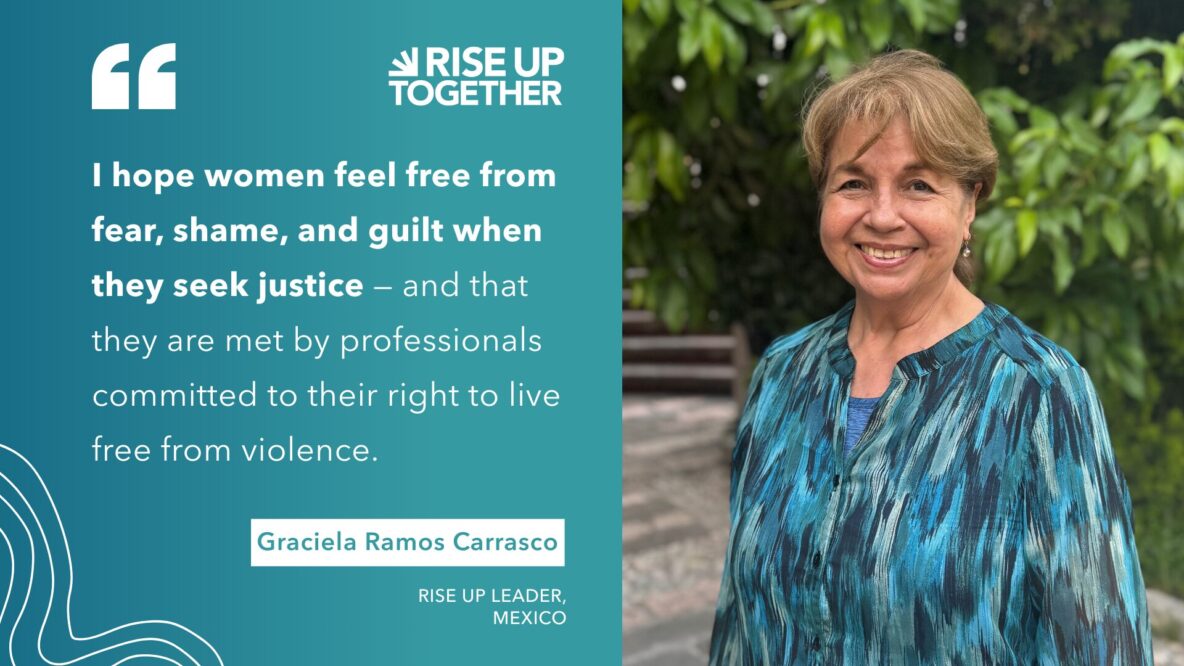
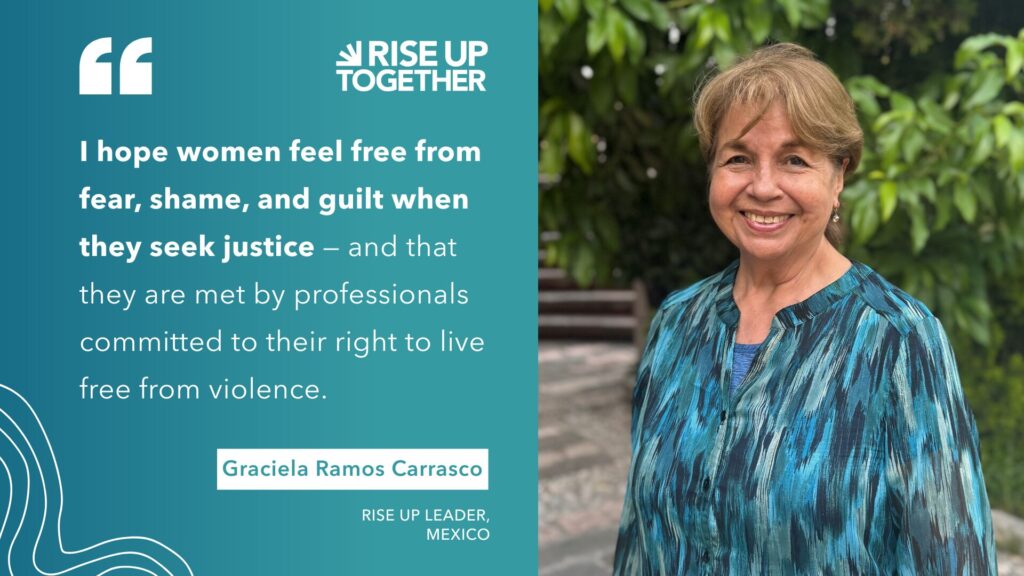
Her vision extends beyond immediate services. She is advocating for a world where the justice system restores dignity, builds trust, and ensures women are met with respect at every step. “I hope women feel free from fear, shame, and guilt when they seek justice – and that they are met by professionals committed to their right to live free from violence,” Graciela said.
Graciela’s early experiences confronting structural barriers have shaped her approach. She shared, “Since I was five years old, I felt a deep pain at injustice. I dreamed of changing the world and protecting the most vulnerable.”
Over the years, she has worked tirelessly alongside sister organizations and women leaders across Chihuahua to create legal and institutional frameworks that put survivors first, while also training and mentoring professionals to provide empathetic, coordinated care. Since 1998, these organizations have united their efforts, strategy, and expertise to drive coordinated political advocacy for women’s access to justice.
Graciela also notes the challenges that remain. “When public officials lack a gender perspective, the result is restricted budgets, poor treatment, and re-victimization that leaves women in greater danger.” Through her ongoing advocacy, she continues to ensure that these issues are addressed and that reforms are implemented meaningfully on the ground.
Graciela’s decades-long leadership, now supported and amplified by Rise Up Together, shows that persistent advocacy can reshape institutions, influence laws, and ensure survivors of gender-based violence receive the justice and support they deserve.
Her work demonstrates that real change happens when legislation, institutions, and human-centered services come together to protect and empower women.
Graciela’s advocacy proves that systemic transformation is not only possible but life-changing for survivors, offering both immediate relief and the hope of a future free from gender-based violence.

