
In Kenya, an estimated 1 million girls miss up to 39 days of school each year because they lack access to sanitary pads. In rural communities, 1 in 2 girls struggles to access menstrual products at all.
Not because they are unwilling to learn. Not because of lack of ambition. But because systems continue to fail them.
Rise Up Leader Grace Nansamba is working to change this reality and ensure that menstruation never stands between a girl and her future.
Welcome to our May Women’s Health Month edition of Global Good News, where we spotlight Rise Up Leaders driving bold change in their communities and advancing gender justice around the world.
Despite existing laws guaranteeing free sanitary towels for girls in public schools, many schools still face shortages, delayed distribution, inadequate sanitation facilities, and weak oversight. With funding and support from Rise Up Together, Grace and her organization, Horn of Africa Youth Network, are working to ensure girls consistently receive sanitary pads and safe menstrual health support in public schools across Kenya – advocacy that has the potential to positively impact more than 2.3 million girls nationwide. Her Rise Up Together-supported advocacy project will continue through early 2027.
We recently spoke with Grace about why this work matters, the barriers girls continue to face, and the change she hopes to see.
Menstrual health is often treated as a personal issue, but your work highlights how deeply it affects girls’ education, health, and dignity. What are you seeing on the ground in Kenya, and why is this issue so urgent?
Grace: In Kenya, menstrual health is often treated as a private or hygiene issue, yet what we are seeing on the ground directly affects girls’ education, confidence, participation, and dignity.
Many girls still lack reliable access to sanitary towels, proper sanitation facilities, clean water, privacy, and safe disposal systems. Some miss several days of school every month because they fear leakage, staining their clothes, ridicule from classmates, or simply because they have nothing safe to use during their periods. Others attend school while in pain, anxious, distracted, and unable to fully participate in class or school activities. Over time, this affects their confidence, academic performance, and overall wellbeing.
What is even more concerning is the level of vulnerability some girls are exposed to because of period poverty. Some girls engage in hard labor or transactional relationships just to get money for sanitary pads, underwear, painkillers, soap, toilet paper, and other basic menstrual dignity supplies. In some cases, girls do not even have proper underwear to safely use the pads when they receive them. These are painful realities many people do not see because menstruation is still surrounded by silence and stigma.
The urgency is that Kenya already has laws and policies meant to protect girls. However, many schools and communities still experience inconsistent implementation, limited accountability, delayed distribution of sanitary towels, and inadequate menstrual health support systems.
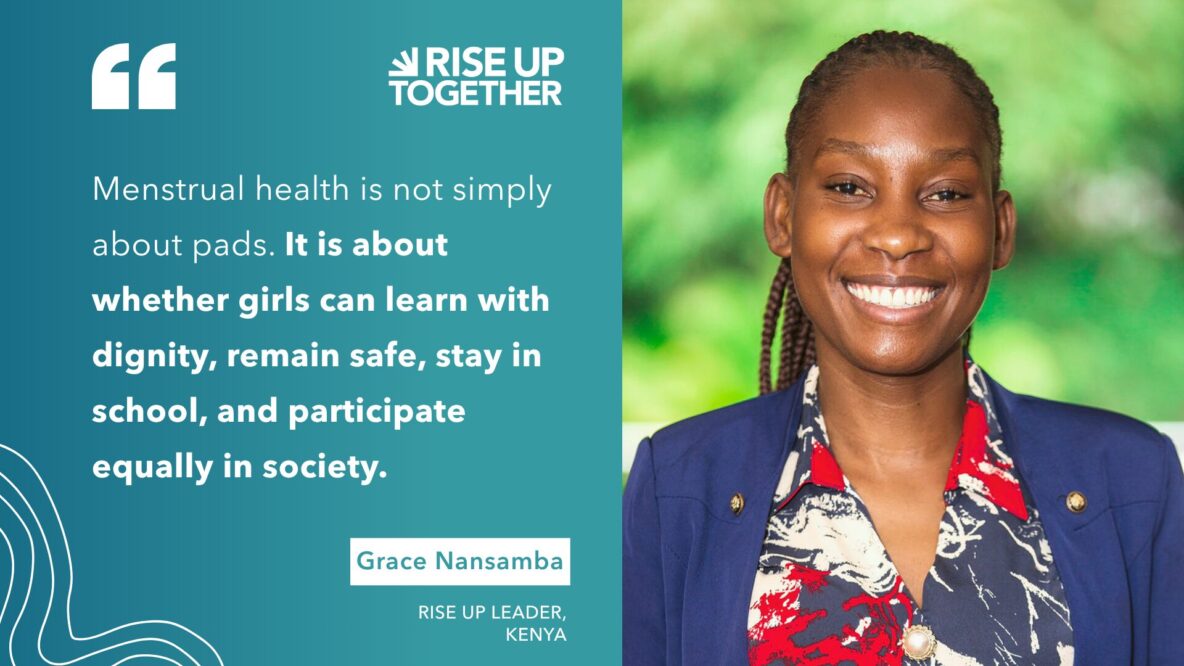
Menstrual health is not simply about pads. It is about whether girls can learn with dignity, remain safe, stay in school, and participate equally in society. No girl should have to suffer, miss opportunities, or risk her future because of a natural biological process.
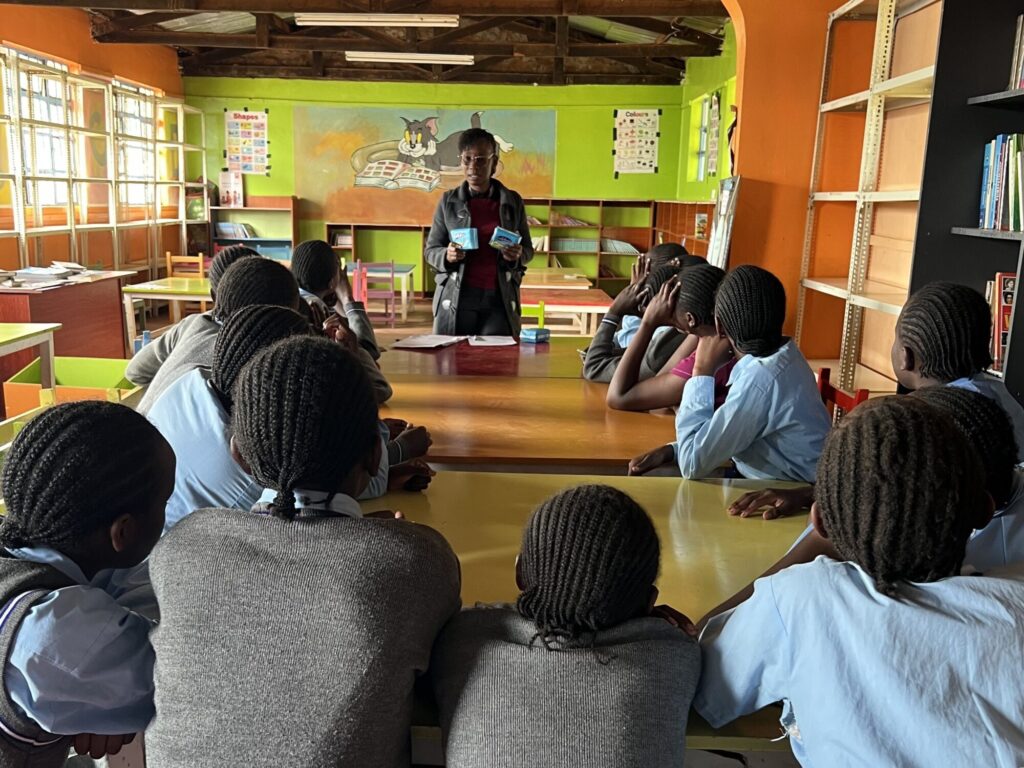
What happens when girls do not have reliable access to sanitary towels or safe disposal facilities at school?
Grace: When girls do not have reliable access to sanitary towels or safe disposal facilities at school, they are forced to improvise with whatever they can find to manage their periods. Some use old rags, pieces of cloth, tissue paper, mattress material, sponges, or multiple layers of clothing – alternatives that are often uncomfortable, unhygienic, and unsafe. Others depend on borrowing pads from friends, teachers, neighbors, or well-wishers whenever help is available.
The consequences are both immediate and long-term. Many girls stay home during their periods because they fear leakage, staining their uniforms, embarrassment, or simply because they have nothing safe to use. Some girls miss three to five days of school every month. Over a school year, that can amount to weeks of lost learning. Teachers continue with lessons, girls fall behind academically, and the shame quietly builds over time.
Your project is still underway, but what progress or momentum are you already seeing? Are there any early wins, partnerships, public conversations, or shifts in accountability that give you hope?
Grace: Even though the project is still in its early stages, I am already seeing encouraging momentum from the ground. As part of the baseline assessment, I have visited different counties and public schools and interacted closely with teachers, education officers, and other stakeholders. One thing that stood out to me was how passionate many teachers are about supporting girls’ menstrual health and dignity. Since they are often the first people girls turn to in school, they shared very openly about the challenges girls face during menstruation.
Several teachers told us that there are times they personally contribute money from their own pockets to buy sanitary pads for girls because of shortages or delays in distribution of free sanitary towels. They spoke about witnessing absenteeism, discomfort, low concentration in class, and the frustration many girls silently go through every month.
What encourages me most is that these conversations are beginning to move beyond simply providing pads and toward deeper discussions around dignity, implementation gaps, accountability, and the everyday realities girls experience every month.
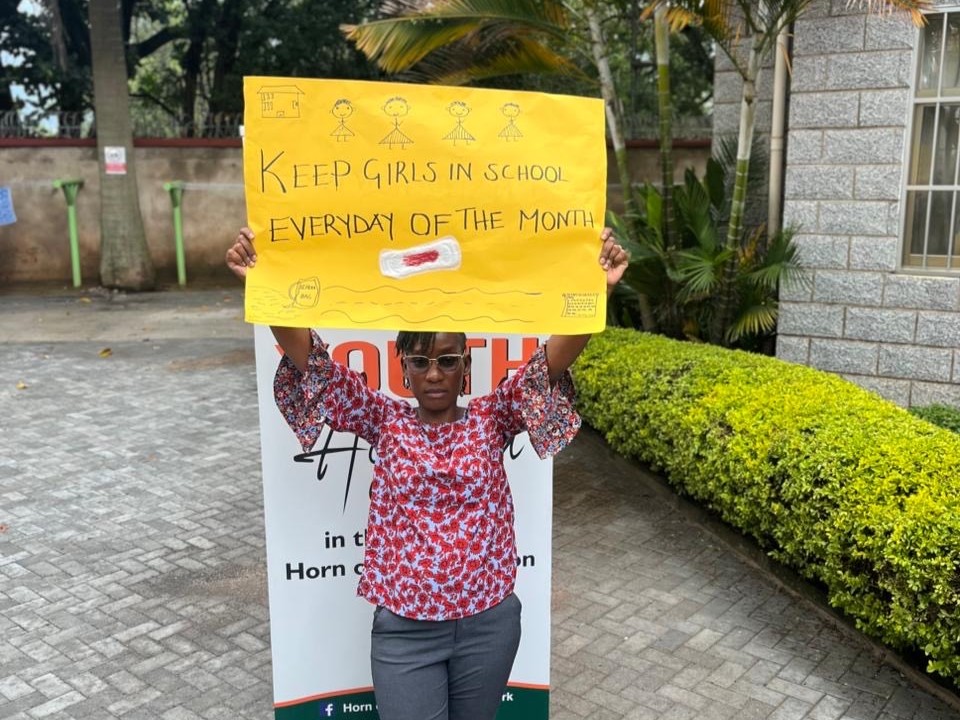
How has support from Rise Up Together strengthened your ability to advance this work and engage decision-makers?
Grace: Support from Rise Up Together has strengthened this work in a very meaningful way, not only through funding but also through mentorship, training, and continuous guidance. Our journey with Rise Up Together began in July 2024 when I was selected into the Rise Up Leadership and Advocacy Accelerator in Kenya. Through the training, I gained practical skills in advocacy, policy engagement, strategic communication, and accountability approaches. The experience helped us move beyond identifying challenges and begin thinking more intentionally about systems change and long-term impact for girls and women.
Being part of the Rise Up network has also connected us to a broader community of local leaders working to advance equity, health, education, and dignity within their communities. Their support has helped us engage decision-makers more confidently, strengthen our advocacy approach, and lead courageous conversations around menstrual health, dignity, and accountability in Kenya.
What gives you hope as you continue this work for girls’ health, dignity, and education in Kenya?
Grace: Many girls are now being encouraged to understand that menstruation is normal, to speak up, to demand proper sanitation facilities, and to advocate for their rights and wellbeing.
That gives me a lot of hope because it reminds me that what I experienced growing up was not an isolated struggle. Many girls went through similar experiences silently because they did not know that their voice or dignity mattered. Today, more girls are beginning to realize that they deserve support, safety, dignity, and the opportunity to fully participate in school and society.
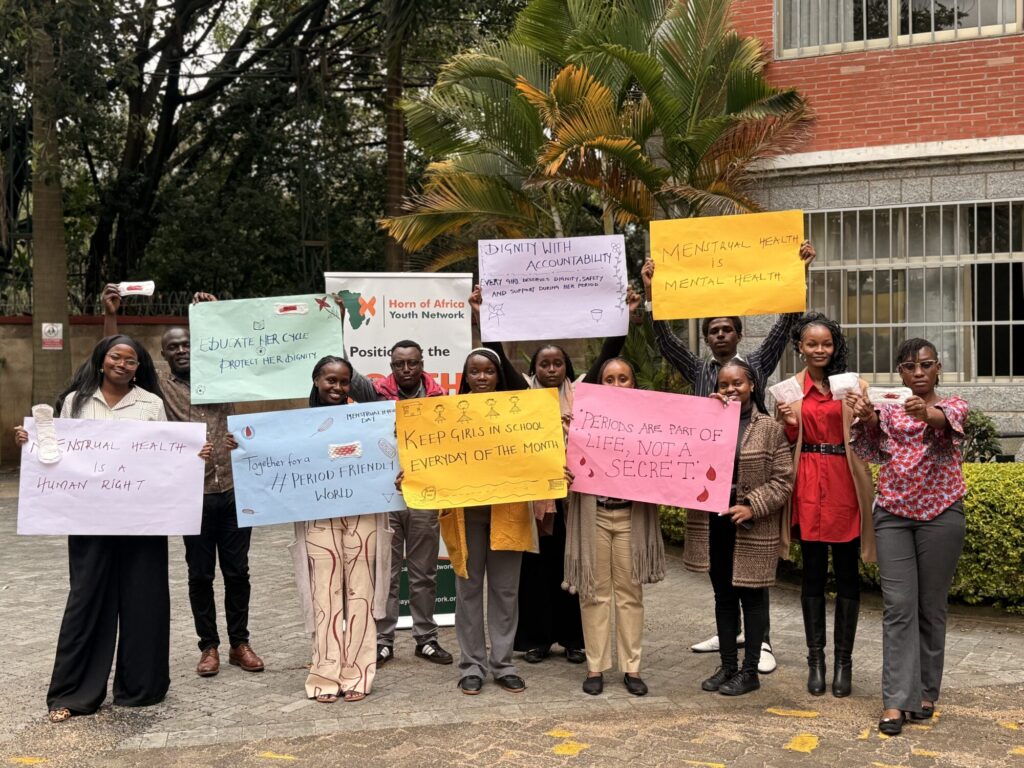
Grace’s advocacy is a reminder that menstrual health is deeply connected to girls’ education, health, dignity, and long-term opportunity.
At Rise Up Together, we know that when girls are supported, the impact reaches far beyond the classroom.
It means staying in school instead of falling behind, participating with confidence instead of fear or embarrassment, and knowing that their health, dignity, and futures matter.
This is what real progress looks like – not just policy on paper, but systems that ensure every girl has the support she needs to learn, thrive, and shape her own future.
Statistic source: UNFPA Kenya

