
In Delhi, India’s public transport system, women make up less than 3% of the workforce – not because they don’t belong in these jobs, but because conditions make it difficult to stay, earn, and build a stable future.
Too often, unsafe conditions, lack of basic facilities, and workplace cultures that were never designed with women in mind push them out of these roles. As a result, women are excluded from one of the most stable and essential sectors of the urban economy. These jobs offer consistent income, visibility in public life, and pathways to long-term economic security, yet remain out of reach for many.
This is the reality that Rise Up Leader Hari Sharma is working to change.
With support from Rise Up Together, Hari and his team at Azad Foundation are partnering with the Delhi Transport Corporation to improve everyday workplace conditions.
They are working to ensure access to clean, functional toilets, safe spaces to rest during long shifts, and clear systems for reporting concerns.
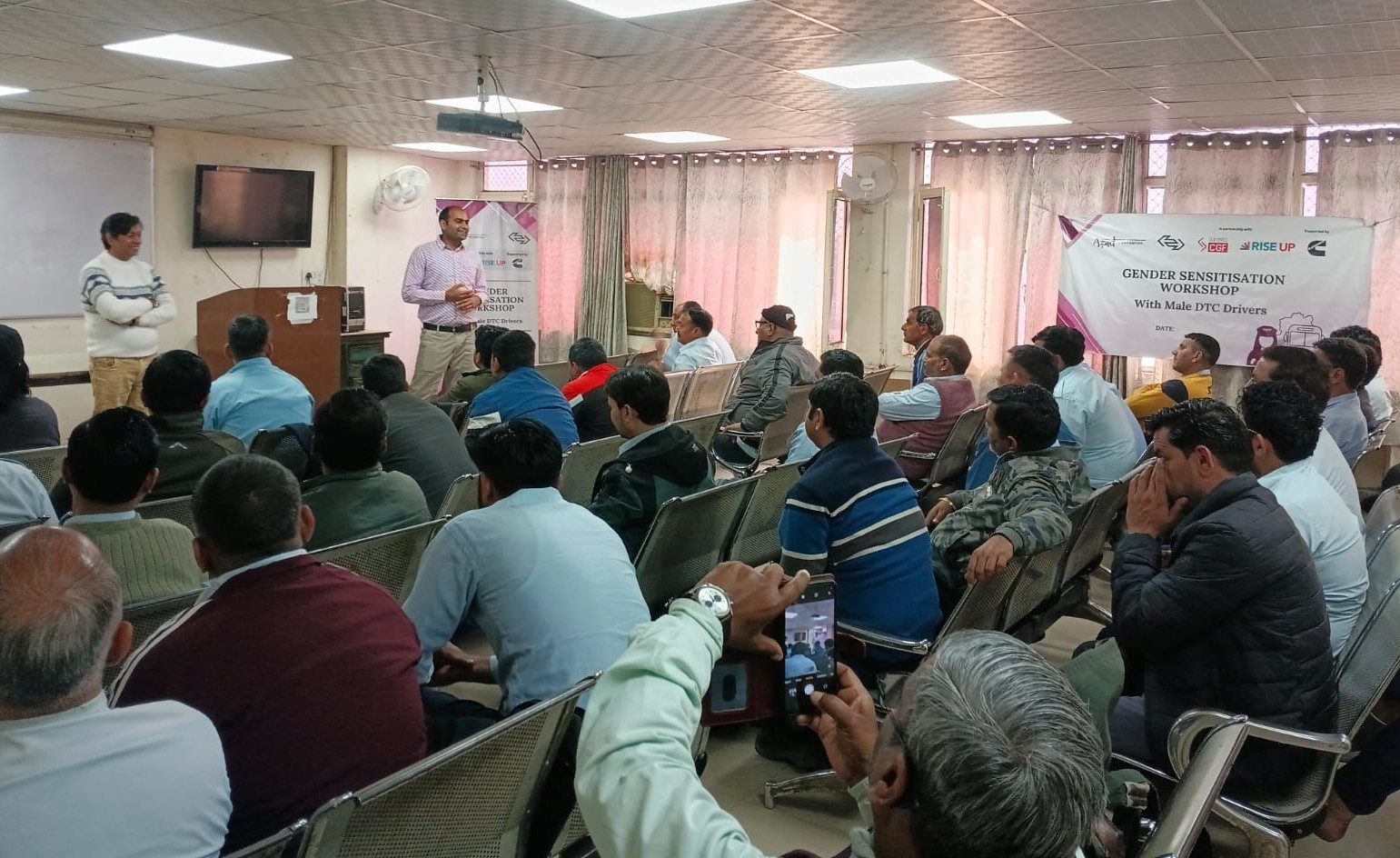
At the same time, they are leading gender sensitization workshops with drivers, conductors, and transport officials. These sessions are designed to challenge harmful norms and cultural beliefs, and build more inclusive, respectful workplaces where women can succeed.
This work is already beginning to shift what is possible.
More than 4,500 male drivers and conductors have completed gender sensitization training, now integrated into official systems. Clean and safe restrooms and breakrooms are being installed across multiple depots. Today, 93 women are driving buses in Delhi, a number that continues to grow as barriers begin to fall.
These changes may seem simple, but they are decisive.
Without safe facilities or supportive environments, many women are forced to leave jobs they are fully capable of doing. The issue is not a lack of skill or interest. It is whether the conditions exist for women to remain and thrive.
When those conditions improve, the impact is immediate and tangible.
It means not having to walk away from a job because it feels unsafe.
It means earning a reliable income instead of facing constant uncertainty.
It means having the financial independence to support themselves and their families.
And it means normalizing women’s presence across the workforce and in public life.
For many women, this shift can redefine what is possible for their lives and for future generations.
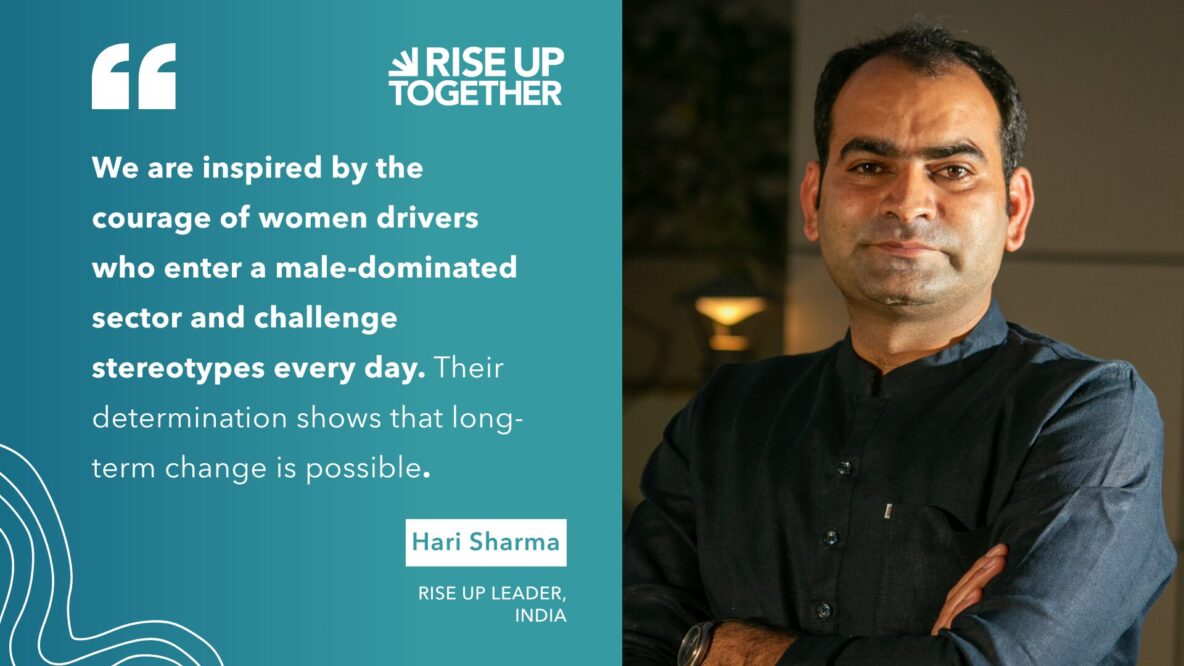
“We are inspired by the courage of women drivers who enter a male-dominated sector and challenge stereotypes every day,” Hari shared. “Their determination shows that long-term change is possible.”
Hari’s advocacy highlights an important truth. Expanding economic opportunity is not only about opening doors. It is about ensuring that women can stay, grow, and build stability once those doors are opened.
Importantly, this work is still underway. Hari’s project with Rise Up Together continues through spring of this year, and the progress seen so far represents a critical step toward long-term, systemic change. As partnerships deepen and reforms continue to take shape, there is strong potential for even greater impact across Delhi’s transport system.
This is what real progress looks like. Not just access, but lasting opportunity. Not just inclusion, but the conditions to succeed.
And at Rise Up Together, the good news is that it is happening every day.

