
When floods disrupt a classroom, the impact does not end when the water recedes.
In Rivers State, Nigeria, climate change is already shaping whether girls can stay in school.
Severe flooding and environmental degradation are disrupting livelihoods across communities. For many families, these climate shocks are economic shocks. When income from farming or local trade disappears, families are forced to make impossible decisions about how to survive.
Too often, a girl’s education is the first to be sacrificed.
Welcome to our Earth Month edition of Global Good News, a reminder that real progress is happening every day – led by Rise Up Leaders around the world.
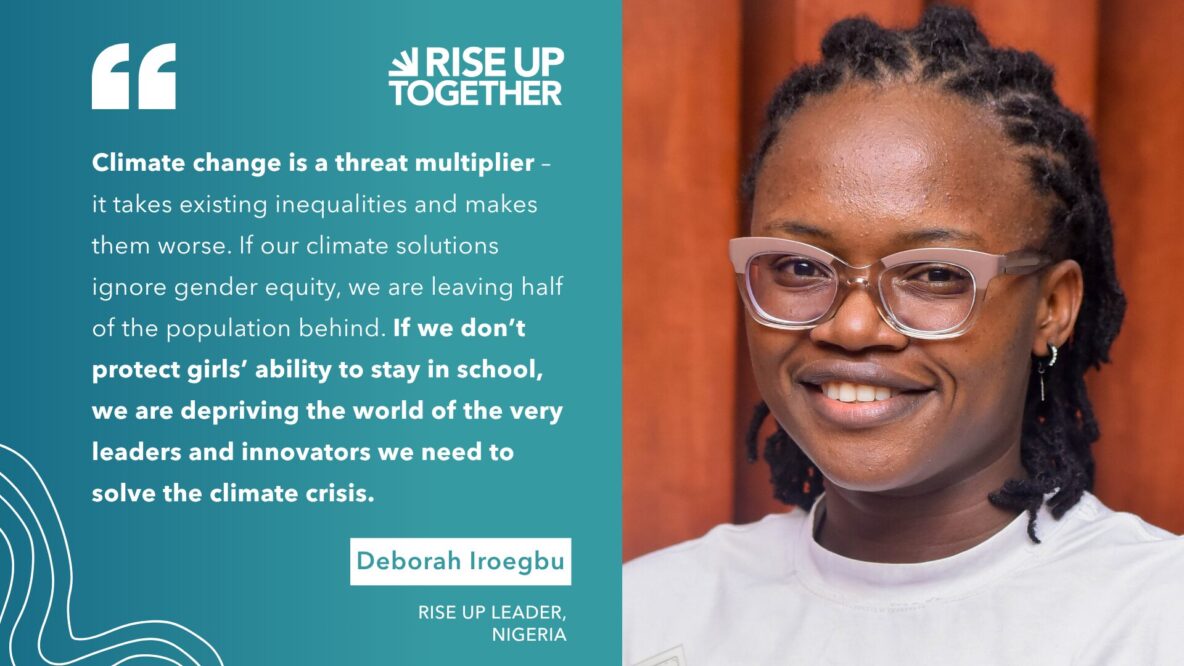
“Girls are pulled out of school to help manage the household, assist in alternative income generation, or simply because the family can no longer afford the fees. Climate change is quite literally washing away their access to the classroom,” said Rise Up Leader Deborah Iroegbu.
This is not a distant or future risk. It is already happening.
Deborah has seen it firsthand. During her service year teaching at Rumuapara Community Secondary School, heavy rains regularly flooded classrooms and brought learning to a standstill. But the most lasting impact came after the floods.
“I watched as the environmental disruption devastated local livelihoods, and many of my brightest, most eager female students simply did not return,” she shared. “They were pulled from school to help their families survive the economic fallout.”
For some girls, the consequences were even more severe, including early marriage or exposure to violence. What begins as a temporary disruption can quickly become a permanent loss of opportunity.
This is the gap Deborah is working to address.
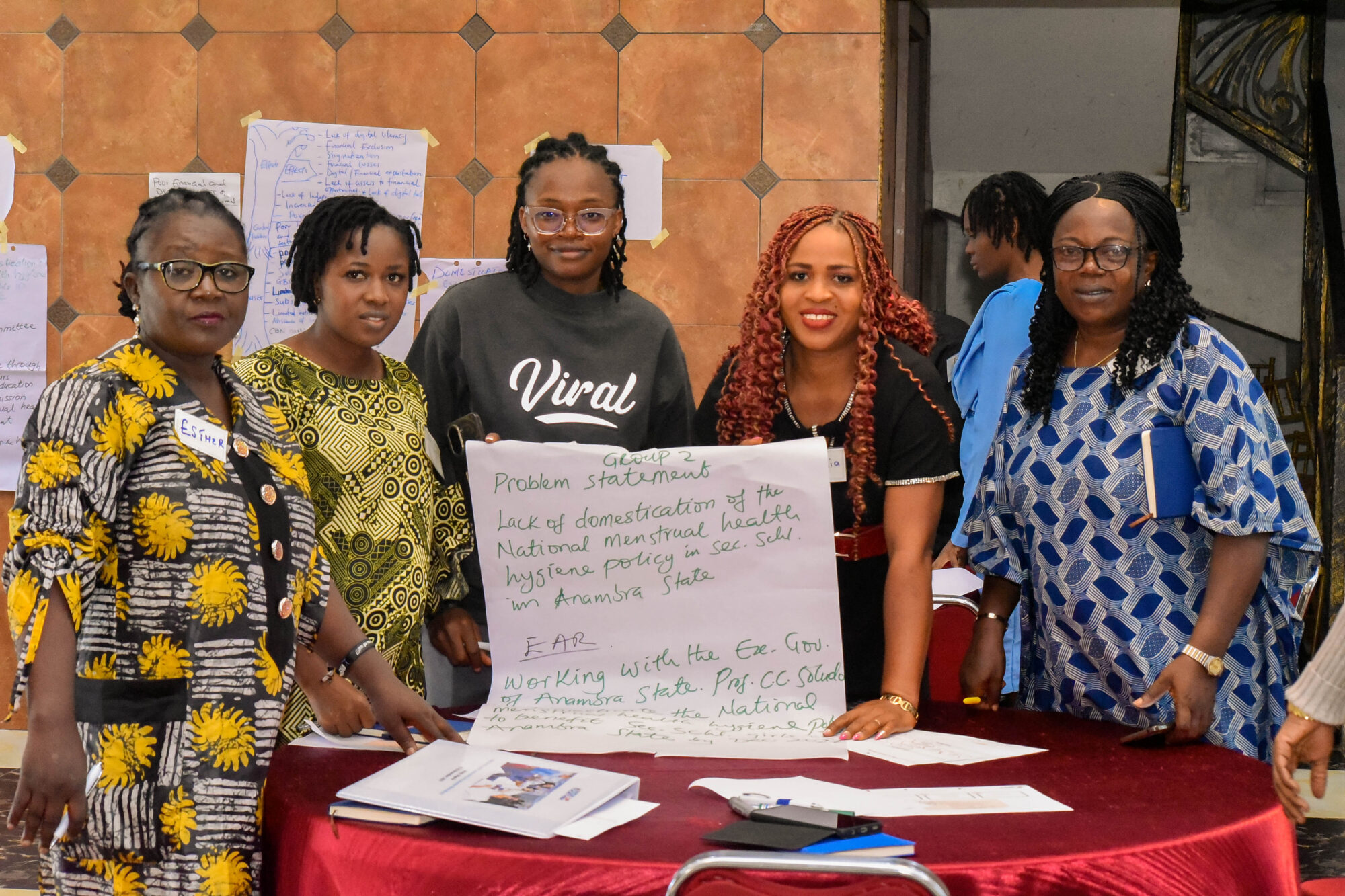
With training and funding from Rise Up Together, she is preparing to advocate for a stronger, more inclusive climate policy in Rivers State. While existing climate plans recognize environmental risks, they do not yet include clear protections for girls’ education.
Deborah’s goal is to change that.
She is working to ensure that the Rivers State Climate Change Bill includes concrete, gender-responsive measures that protect girls’ ability to stay in school. This includes ensuring continuity of education during climate disruptions, investing in resilient school infrastructure, and creating systems that support girls in returning to school if they are forced to leave.
“The bill should also address the increased risk of child and forced marriage linked to climate stress, reduce the unpaid care burden that often pulls girls out of school, and integrate climate education into curricula in a way that positions girls as leaders,” Deborah shared. “Importantly, it should mandate the inclusion of girls and young women in climate decision-making processes and require gender-disaggregated data to ensure accountability and track progress.”
Her vision is not only about access to education. It is about stability, safety, and long-term opportunity.
Educated girls are more likely to become women who can adapt to economic and environmental challenges, support their families, and contribute to sustainable solutions within their communities. When girls are pushed out of school, the effects ripple far beyond the individual.
Importantly, this work is just beginning. Deborah’s advocacy project with Rise Up Together will launch in the coming months, building on the urgency of what she has already witnessed and the opportunity to influence policy before more girls are pushed out of school.
Despite the scale of the challenge, she remains grounded in hope.
“The girls themselves give me the most hope,” she said. “Despite the barriers they face, their desire to learn and lead remains strong.”
Her work is a reminder that climate change is not only an environmental issue. It is a force shaping education, opportunity, and the future of entire communities.
Protecting girls’ education in the face of climate change is not just about crisis mitigation. It is an investment in resilience, equity, and long-term progress.
And it is work that cannot wait.

